

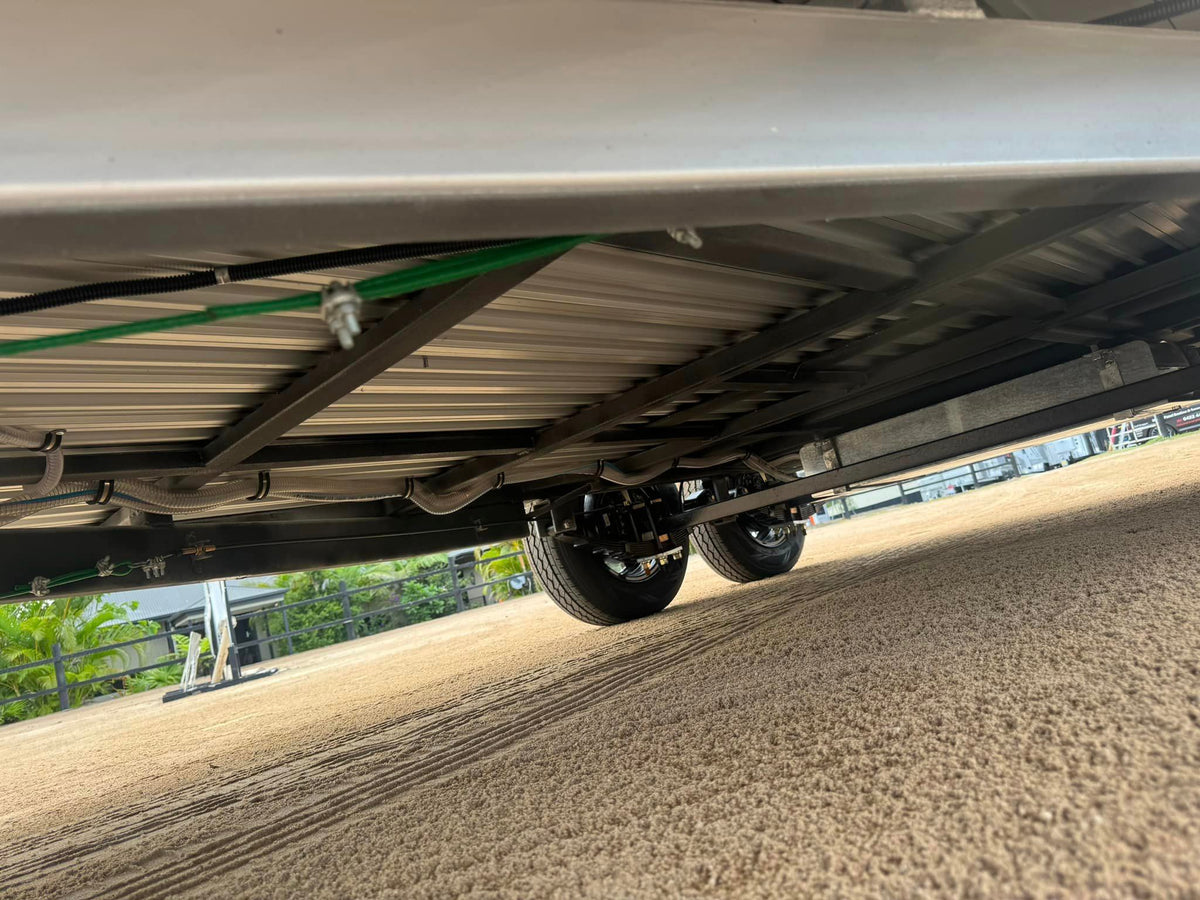
Horse float servicing includes checking the brakes, wheel bearings, suspension, tyres, coupling, electrical connections, floor, doors and safety equipment. Owners should make basic checks before every trip and inspect the floor, dividers and ramp catches monthly. A qualified mechanic should service the float according to the manufacturer's requirements. EuroFloat requires servicing at least every 12 months by a qualified mechanic, with records kept, to maintain its 2-Year Warranty. If you notice a problem between services, have it checked before towing again.
In this guide10 sections
- How often should a horse float be serviced?
- What should you check before every trip?
- What should you inspect every month?
- What should a mechanic check during an annual service?
- How are the brakes and breakaway system serviced?
- Why do wheel bearings and suspension need servicing?
- What servicing records do you need for a EuroFloat warranty?
- What should you do if you notice a problem between services?
- Does a horse float still need servicing if you rarely use it?
- Questions buyers ask
G'day, Wes here. Horse float servicing is something I want every owner to take seriously, even if they only use their float a few times a month. A float can look perfectly tidy from the outside while something underneath needs attention. Regular checks are much easier than dealing with a problem when you're already on the road with horses.
How often should a horse float be serviced?
There are two parts to looking after a float. The first is the routine checks you do yourself, and the second is having the mechanical and safety equipment serviced properly.
Some things should be checked before every trip. Others need a regular inspection, even when the float hasn't been used much.
For a EuroFloat, the warranty requires servicing at least every 12 months by a qualified mechanic, with records kept. If your use or the component manufacturer's instructions call for more frequent attention, follow those requirements.
Here's the schedule I'd use as a starting point.
| When | What needs checking | Who should do it |
|---|---|---|
| Before every trip | Tyres, lights, coupling, chains, plug, brakes, doors and obvious damage | Owner, with professional help if anything is wrong |
| Monthly | Floor and mats, dividers, ramp catches and general condition | Owner |
| At least every 12 months | Bearings, brakes, running gear, suspension, coupling, safety equipment and other service items | Qualified mechanic |
| Whenever a problem appears | The affected component and any related safety concerns | Appropriately qualified person |
This isn't a replacement for the service instructions supplied with your float or its fitted equipment.
A float that spends a lot of time on rough roads or travels regularly may need extra attention. The same applies if something starts behaving differently.
Don't wait for the next scheduled service when there's an obvious safety problem.
What should you check before every trip?
Before loading horses, walk around the whole vehicle and float. I like doing it in the same order each time because it's easier to remember what you've checked.
You don't need to dismantle anything. You're looking for visible damage, missing equipment, anything loose and anything that isn't operating as intended.
Start with the tyres and work your way around.
- Tyres. Check cold pressures, tread, damage and the spare if you carry one.
- Wheels. Look for obvious damage and confirm wheel nuts are secure as required.
- Coupling. Check it's correctly connected, locked and secured.
- Safety chains. Make sure they're correctly attached and the fittings are suitable.
- Electrical plug. Check the connection is properly fitted and undamaged.
- Lights. Test brake lights, indicators and other required lights.
- Brakes. Follow the proper functional test for your braking system.
- Breakaway equipment. Check the connection and required system condition.
- Doors and ramp. Make sure everything closes and latches correctly.
- Horse area. Check the floor, dividers, bars and loose equipment.
If something fails a check, find out why before travelling.
Don't assume a warning will disappear once you've driven a few kilometres. A problem with the brakes, coupling or running gear needs attention before you put horses on board.
Our horse float tyre guide explains those tyre checks in more detail.
What should you inspect every month?
Some parts of the float don't need complicated tools to inspect, but they're easy to overlook.
EuroFloat's warranty guidance includes monthly owner checks of the floor, dividers and ramp catches.
The point is to notice damage or wear before it affects normal use.
For the floor, remove manure and dirt, lift the rubber mats when appropriate and look at the surface underneath.
Watch for moisture, damage or anything that has changed since your last inspection.
Then look at the dividers. Check their padding, fittings, locking points and normal movement, without making adjustments that aren't permitted by the manufacturer.
The ramp and door catches deserve attention as well.
- Make sure catches engage and release properly.
- Look for worn, loose or damaged fittings.
- Check that the ramp closes and secures as intended.
- Inspect hinges and related components for obvious damage.
- Make sure the horse area is clear of loose or broken parts.
- Record anything that needs professional attention.
I would also use the monthly check to give the float a proper clean and look at places that are usually hidden by equipment.
Our horse float floor care guide covers cleaning and inspecting the floor.
What should a mechanic check during an annual service?
An annual service should go beyond the quick checks you can do while the float is parked in the yard.
The mechanic needs to inspect the important mechanical and safety components according to the float and component manufacturers' requirements.
The exact work depends on the model, age, equipment and condition.
Typical service items include:
| Area | What the service may include |
|---|---|
| Wheel bearings and hubs | Condition, wear, lubrication and adjustment as required |
| Brakes | Operation, wear, adjustment and electric brake magnets where fitted |
| Breakaway system | System operation, battery condition and required testing |
| Coupling and safety chains | Wear, attachment, damage and correct operation |
| Wheels and tyres | Condition, load suitability, wheel security and abnormal wear |
| Suspension | Springs, shackles, bushes, U-bolts, axles and mounting points |
| Lights and electrical plug | Function, connections, damage and wiring condition |
| Floor and rubber mats | Damage, deterioration and areas needing attention |
| Ramp and doors | Hinges, catches, seals, fittings and gas struts where fitted |
| Dividers and horse fittings | Locking, padding, security and condition |
| 240V or gas equipment | Appropriate inspection by licensed trades where fitted and required |
Some components need replacement, adjustment or further inspection depending on what the mechanic finds.
Don't assume every annual service includes the same work regardless of the float.
Ask what's included when booking and keep a copy of the completed service report.
If the float has electrical or gas equipment requiring specialist work, make sure the appropriate licensed tradesperson handles those items.
How are the brakes and breakaway system serviced?
Brakes are one of the things I want properly checked, not just looked at from outside the wheel.
A float's braking system needs to operate correctly for the loaded trailer and the towing arrangement.
For systems with electric brakes, a mechanic may need to inspect the brake components, magnets, wiring and adjustment according to the manufacturer's instructions.
The breakaway system also needs attention.
Its job is to operate the trailer brakes in the event of a qualifying separation, according to the fitted system's design.
That means its battery, connections, cable and operating condition all matter.
I'd make sure the service includes the checks specified for that equipment, rather than assuming a quick look at the outside is enough.
If a brake controller behaves differently, a wheel appears to be dragging or a brake test doesn't produce the expected result, don't keep towing and hope it settles.
Arrange a qualified inspection.
For more on how the equipment works, read horse float brakes and breakaway systems.
Why do wheel bearings and suspension need servicing?
Wheel bearings, axles and suspension components carry loads and experience movement every time the float travels.
Some parts can wear gradually without anything obvious appearing on the body of the float.
That's why I want the running gear inspected properly.
A mechanic should look for wear, damage, loose fittings and other signs that a component isn't operating as intended.
Springs, shackles and bushes need attention on systems where they're fitted. U-bolts and axle connections also need checking using the manufacturer's procedures.
Bearings require the correct inspection and maintenance for the particular hub assembly.
It's not a job I'd encourage owners to improvise.
If you hear an unusual noise, notice uneven tyre wear or see a change in ride height, have it investigated.
Those symptoms don't automatically identify which component is wrong, but they tell you something deserves attention.
A float that sits unused for months still needs servicing. Storage doesn't stop every form of deterioration.
Keeping the running gear in good order is part of looking after both the float and the horses travelling inside.
What servicing records do you need for a EuroFloat warranty?
Every new EuroFloat comes with a 2-Year Warranty covering the chassis, body frame, roof frame and suspension, plus doors, ramp, windows, dividers and paint.
There is also an 11-Year Aluminium Flooring System warranty. Conditions apply to both.
The warranties begin on the day you pick up your float.
To keep the warranty valid, the float needs servicing at least every 12 months by a qualified mechanic, and you need to keep the records.
I'd keep everything together from the day you collect the float.
That includes:
- Service invoices. Keep the dates and the name of the business completing the work.
- Inspection reports. Save details of what was checked.
- Repair records. Keep documentation of any parts replaced or faults repaired.
- Photographs. Record damage or problems when they arise.
- Warranty correspondence. Keep copies of any reports and responses.
- Equipment instructions. Store information supplied for fitted accessories.
If you find a defect that may involve a EuroFloat warranty claim, report it within 10 days with clear photographs.
Don't put it aside until the next annual service.
Our horse float warranty guide explains the coverage and conditions in more detail.
What should you do if you notice a problem between services?
A service date isn't permission to keep using a float that's showing signs of trouble.
If something looks damaged, sounds unusual or stops operating correctly, find out what's happening.
The response depends on the problem, but safety comes first.
For example, I'd stop using the float until properly assessed if there were concerns about the brakes, coupling, suspension, wheel assembly or floor.
For a damaged door latch or divider fitting, I'd also want the problem corrected before putting horses at risk.
Here's the approach I'd take:
- Stop and assess the issue in a safe location.
- Avoid travelling with horses if the float may be unsafe.
- Take clear photographs of the problem.
- Check the manufacturer's guidance for the affected equipment.
- Contact an appropriately qualified repairer.
- Keep records of the assessment and repair.
- If it may be a warranty defect, report it within the required timeframe.
At EuroFloat, our Service Centre handles servicing, repairs, warranty and parts.
You can ask what work is required for your model and have the appropriate service arranged.
Does a horse float still need servicing if you rarely use it?
Yes. A float doesn't need to travel every weekend for its components to age or deteriorate.
Tyres can age while parked. Electrical connections, moving parts and other equipment can also develop problems during storage.
A float that's been sitting for a long period deserves a proper inspection before returning to regular use.
I would pay particular attention to the tyres, brakes, bearings, coupling, lights and horse area.
Don't assume that because everything worked the last time you used it, it will automatically work now.
And remember that servicing is about more than keeping the float looking nice.
It's about making sure the equipment does its job when you're carrying horses.
The way I see it, a little maintenance throughout the year is much easier than discovering a problem on the morning you're leaving for a show.
Questions buyers ask
How often should a horse float be serviced?
Follow the manufacturer and component requirements. EuroFloat requires a qualified-mechanic service at least every 12 months to maintain its warranty.
What does a horse float service include?
Typical items include bearings, brakes, breakaway equipment, tyres, suspension, coupling, lights, floor, ramp, doors and dividers. The exact work depends on the float.
Do I need to service my float if I don't use it often?
Yes. Tyres, seals, moving parts and other equipment can deteriorate during storage. Inspect the float before returning it to use.
Can I service my horse float myself?
Owners can complete appropriate routine checks, but mechanical servicing and specialist electrical or gas work should be completed by qualified people. EuroFloat warranty servicing must be done by a qualified mechanic.
How do I keep my EuroFloat warranty valid?
Have the float serviced at least every 12 months by a qualified mechanic, keep the records and follow the warranty conditions. Report defects within 10 days with clear photographs.
Does EuroFloat have a service centre?
Yes. EuroFloat's own Service Centre handles servicing, repairs, warranty and parts.
Keep your float ready for the next trip
Compare the EuroFloat range and ask us about servicing, maintenance and warranty requirements before choosing.


Servicing advice is general guidance. Follow the instructions for your actual float and fitted equipment, use qualified tradespeople where required and refer to the current EuroFloat warranty conditions.
