

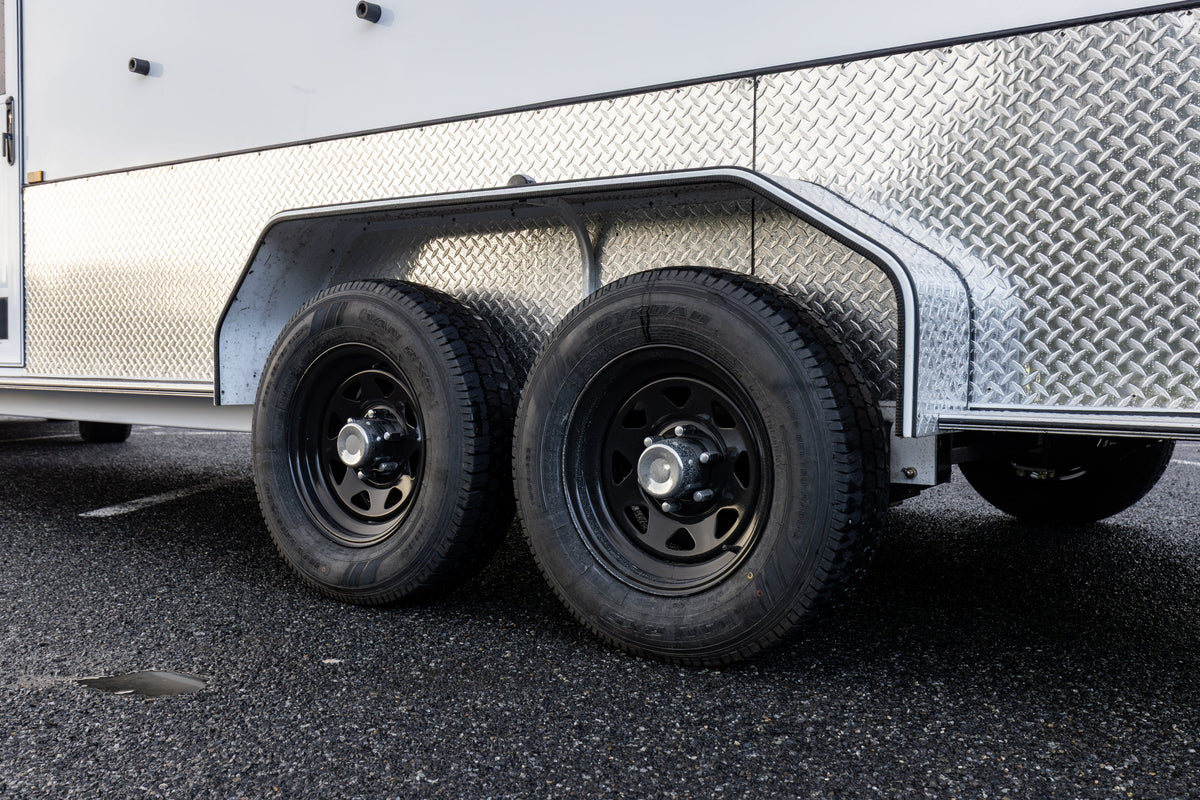
Horse float tyres should be checked before every trip, even when the float has been sitting in the yard. Check tyre pressures when cold, using the tyre placard or compliance information on your float and the tyre manufacturer's load and pressure guidance. Look for uneven tread wear, cracks, bulges, damage and signs of ageing. Check the spare tyre too, if you carry one. Tyres can deteriorate with age even when they have plenty of tread left. If anything looks concerning, have a tyre professional inspect it before towing horses.
In this guide9 sections
- Why do horse float tyres need regular checking?
- What tyre pressure should a horse float have?
- How do you check horse float tyre tread and sidewalls?
- How old can horse float tyres be before they need replacing?
- What wheel and tyre sizes does EuroFloat use?
- Can uneven tyre wear mean there's a suspension problem?
- What else should you check around the wheels?
- What should you check before buying a float with older tyres?
- Questions buyers ask
G'day, Wes here. Horse float tyres are easy to forget about because a lot of floats spend more time parked than travelling. You might only use yours on weekends, but the tyres are still ageing while it's sitting there. I always want people to check them properly before putting horses on board.
Why do horse float tyres need regular checking?
A horse float tyre has to carry its share of the loaded float while dealing with braking, cornering and changing road conditions. Its condition matters every time you tow, whether you're going to a local lesson or travelling across the state.
One thing people sometimes overlook is that trailer tyres can get old before the tread wears down. A float might only travel occasionally, so the tyres can still look reasonably new even though they've been exposed to years of weather and storage.
That's why I wouldn't judge a tyre by tread depth alone.
There are several things worth looking at:
- Pressure. Is the tyre inflated according to the correct guidance for the load?
- Tread. Is there enough tread, and is the wear reasonably even?
- Sidewalls. Are there cracks, bulges, cuts or other signs of damage?
- Age. How old is the tyre, regardless of how much tread remains?
- Valves. Are the valve stems and caps in good condition?
- Wheels. Are the wheel nuts secure and the wheels undamaged?
- Spare. If you carry one, is it suitable and ready to use?
These checks don't take much time, but they can help you notice a problem before you're travelling with horses.
If something doesn't look right, don't assume it'll be fine for one more trip. Get it checked before loading.
What tyre pressure should a horse float have?
There's no single pressure that suits every horse float tyre. The correct figure depends on the tyre, its load rating, the float and the manufacturer's requirements.
On your EuroFloat, use the tyre placard or relevant compliance information on your actual float, together with the tyre manufacturer's load and pressure guidance. Don't rely on a figure someone has given you for a different model.
Check the pressure when the tyres are cold, before starting your journey.
A tyre can warm up while you're driving, which changes its pressure. Comparing a warm reading with a cold-pressure recommendation can lead you to make the wrong adjustment.
My approach is simple:
- Find the correct information. Check the actual float and fitted tyre specifications.
- Use a suitable gauge. Make sure you can read the pressure accurately.
- Check every tyre. Don't assume both sides will have identical readings.
- Check when cold. Do this before the float has been travelling.
- Check the spare. A spare that's been sitting unused can lose pressure too.
- Inspect the valves. Look for obvious damage and replace missing valve caps.
If you're unsure about the correct pressure, ask a qualified tyre professional to confirm it for the tyre and load.
Don't increase the pressure simply because you're carrying horses, unless that adjustment is supported by the applicable tyre and trailer guidance.
And don't guess based on the tyre's appearance. A tyre can look inflated without being at the correct pressure.
How do you check horse float tyre tread and sidewalls?
Tyre tread is the part that contacts the road, but it's only one area to inspect.
Start by looking across the width of the tread. Uneven wear, damage or an unusual pattern can be a sign that something needs attention.
Then look carefully at the sidewalls.
Cracks, cuts and bulges shouldn't be ignored, even when the tread looks good. Some damage is easier to see when you inspect both sides of the float rather than standing back and looking at the wheels.
Here's what I'd watch for:
- Low tread. Check against the applicable legal requirements and tyre manufacturer's guidance.
- Uneven wear. One shoulder wearing faster than the other needs investigation.
- Cracking. Look at the sidewalls and around the tread edges.
- Bulges. A visible bulge can indicate internal tyre damage.
- Cuts. Check whether the tyre has been damaged by road debris or contact.
- Objects in the tread. Nails, screws and other material may be embedded in the tyre.
- Valve damage. Look for cracks, leaks or missing caps.
If you find a nail or other object, don't pull it out and assume the tyre will remain usable. Have a tyre professional assess it.
A tyre with a bulge, significant damage or concerning wear shouldn't be used until it's been checked.
Remember to look at the spare as well. There's no point carrying one if it's unsuitable when you need it.
How old can horse float tyres be before they need replacing?
Age matters because tyre materials change over time, even when the float isn't being driven.
A horse float stored outside may spend long periods exposed to sunlight and weather. A float kept undercover can still have tyres that age while sitting unused.
Many tyre manufacturers give inspection or replacement advice based on tyre age. Some recommend considering replacement around five or six years, but that isn't a universal rule for every tyre.
Follow the advice for the actual tyre fitted to your float.
You can usually find a manufacturing date code on the tyre sidewall. On tyres using the common four-digit date format, the first two digits represent the production week and the last two represent the year.
For example, a code ending in 2424 indicates manufacture in the twenty-fourth week of 2024.
That tells you when the tyre was made, not when it was installed on the float.
A tyre may also need replacing well before any age-based recommendation if it's damaged or worn.
I'd ask a tyre professional to inspect older trailer tyres rather than relying on appearance alone. It's a sensible part of preparing a float that hasn't been used for some time.
What wheel and tyre sizes does EuroFloat use?
Wheel size and tyre size are different things. A wheel measurement doesn't tell you the full tyre specification, including its load rating.
Across our Prestige product pages, the listed wheel and axle arrangements vary by float type.
| EuroFloat range | Listed axle and wheel arrangement |
|---|---|
| Prestige straight loads | 5-stud axles with 14-inch wheels |
| Prestige angle loads | 6-stud axles with 15-inch wheels |
| Overnighters | 6-stud axles with 15-inch wheels |
| Goosenecks | 6-stud axles with 15-inch wheels |
These are wheel specifications, not tyre-size recommendations.
Don't assume the same details apply to a Classic model or another float simply because it looks similar.
When replacing tyres, you need the correct tyre size, load rating and other specifications for the actual float.
I'd also check that a replacement wheel is suitable for the axle and hub arrangement. The number of wheel studs is only one part of that compatibility.
If you're buying a second-hand float, look for evidence that the wheels and tyres match the manufacturer's requirements.
Don't fit a tyre just because it physically fits the rim. Have a qualified tyre supplier confirm the appropriate specification.
Can uneven tyre wear mean there's a suspension problem?
Yes. Uneven tyre wear can be a warning sign of a problem elsewhere in the running gear.
It doesn't necessarily mean the tyre itself is faulty.
Suspension wear, axle alignment and wheel-bearing problems can all contribute to unusual wear patterns. Incorrect inflation or loading can also play a part.
Here's a simple guide to what deserves attention.
| What you notice | What it could indicate | What to do |
|---|---|---|
| Wear on one edge | Alignment, loading or suspension concern | Arrange a qualified inspection |
| Uneven patches | Running-gear or tyre issue | Have the tyre and running gear checked |
| Repeated pressure loss | Leak, valve or wheel issue | Have a tyre professional investigate |
| Cracks or bulges | Ageing or damage | Stop using the tyre until assessed |
| Unusual wheel noise | Bearing or other mechanical issue | Have the running gear inspected |
These are possible causes, not a way to diagnose the problem yourself.
If one tyre keeps wearing differently from the others, I wouldn't simply replace it and forget about it. You need to understand why it's happening.
Our horse float suspension guide explains the parts underneath the float.
You can also read horse float servicing: what needs checking and when for the wider maintenance routine.
What else should you check around the wheels?
Tyres are only part of the wheel assembly. The wheels, nuts, hubs and bearings need attention too.
Before towing, look for anything obviously loose, damaged or different from normal. Pay particular attention after maintenance or a wheel change.
I like owners to understand what normal looks like on their own float.
A practical check includes:
- Wheel nuts. Make sure they're secure according to the manufacturer's requirements.
- Wheel condition. Look for visible cracks, damage or distortion.
- Valve caps. Replace missing caps and check the valves.
- Bearings. Pay attention to unusual noises or other warning signs.
- Tyre clearance. Look for evidence of rubbing against nearby components.
- Spare equipment. Check the condition and suitability of the spare, if fitted.
Wheel nuts need the correct tightening procedure and specified torque. Don't guess or over-tighten them.
Bearing inspection and wheel repairs should be completed by a qualified mechanic.
At EuroFloat, our Service Centre handles servicing, repairs, warranty and parts.
It's worth having the complete running gear checked rather than focusing only on the rubber touching the road.
What should you check before buying a float with older tyres?
If you're looking at a second-hand float, tyres deserve the same attention as the floor, brakes and coupling.
A float might look well presented but still have tyres that need replacing.
I would start by checking the date codes, tread, sidewalls and overall condition. Then ask about the maintenance history.
You also want to know whether the tyres are suitable for the actual float and its rated loading.
If you find a problem, get a qualified inspection and account for any necessary work before buying.
Roadworthy and tyre requirements can vary between states and territories. Check the rules that apply to your situation rather than assuming a float registered elsewhere meets every requirement.
Our horse float registration and roadworthy guide covers where to check the relevant rules.
The main thing I'd remember is that tyres don't have to look worn out to need attention. Check their age, condition and suitability before carrying horses.
Questions buyers ask
What PSI should horse float tyres be?
There isn't one correct pressure for every float. Use the tyre placard or applicable compliance information and the tyre manufacturer's load and pressure guidance.
Should horse float tyre pressures be checked cold?
Yes. Check them before travelling, using the relevant cold-pressure guidance for the fitted tyres.
How often should I replace horse float tyres?
Follow the tyre manufacturer's advice and have ageing tyres inspected. Condition matters as well as age, particularly when a float spends long periods parked.
How do I tell how old a horse float tyre is?
Look for the manufacturing date code on the sidewall. On the common four-digit code, the first two digits show the week and the last two show the year.
Do EuroFloat straight loads and angle loads use the same wheels?
Not across the listed Prestige range. Prestige straight loads list 5-stud axles with 14-inch wheels, while Prestige angle loads list 6-stud axles with 15-inch wheels.
Can uneven tyre wear mean something else is wrong?
Yes. Suspension, alignment, bearing, inflation or loading issues can contribute to uneven wear. Have the complete wheel and running-gear assembly checked.
Give your float a proper check before towing
Compare our range and ask about servicing, tyres and the running gear on the model you're considering.


Tyre advice is general information. Follow the tyre and float manufacturer's specifications, applicable road rules and qualified advice before towing.
