

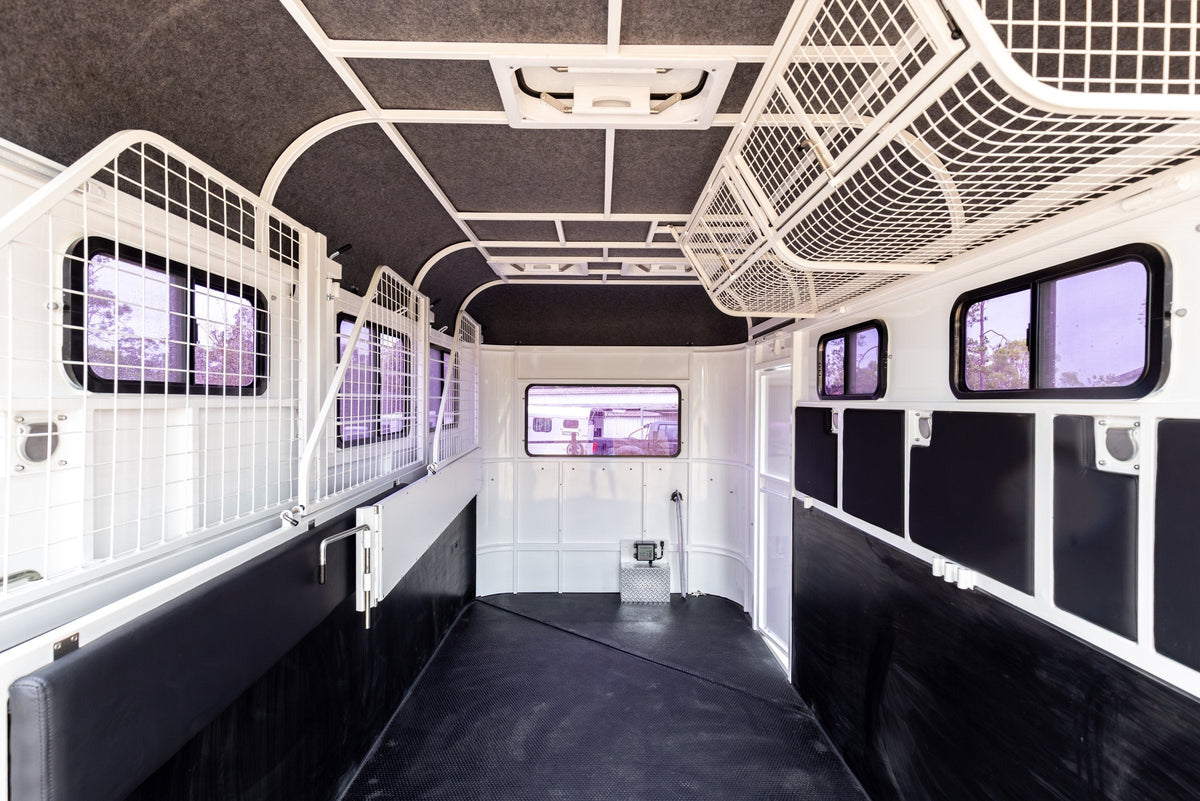
After every trip, muck out, lift the mats, hose the floor and mats, and let everything dry properly with the ramp and doors open. Use a mild cleaner and avoid bleach and harsh chemicals. Once a month, check the floor, mats and ramp area for movement, noise, damage or corrosion. Wash out straight away after the beach or a wet trip. A clean, dry floor lasts longer, and on a EuroFloat it keeps your 11-Year Aluminium Flooring System warranty on track.
In this guide9 sections
G'day, Wes here. If I could get every horse owner to look after just one part of their horse float, it'd be the floor. It's the part you see least and think about least, yet it carries your horses on every single trip. A bit of routine care keeps it safe, keeps it looking good, and protects your float's value when it's time to sell.
Why the floor matters most
Your float floor takes the full weight of your horses, often while they're shifting their balance through corners and braking. It also lives with urine, manure, water and wet hay. Left sitting, that mix holds moisture and ammonia against the floor and the mats.
Every EuroFloat uses a reinforced aluminium flooring system made from 25mm aluminium panels. Unlike timber, aluminium doesn't rot, which is why we back it with an 11-Year Aluminium Flooring System warranty. Conditions apply. Aluminium is tough, but it still deserves care, and the mats, seams and ramp area all need attention too.
After every trip

This takes ten minutes and makes the biggest difference.
- Unhitch on level ground, or leave it hitched, with the ramp down and the doors and windows open.
- Muck out. Remove manure, wet hay and any bedding. Don't leave it in the float overnight.
- Lift the mats. Pull them out or prop them up so you can get to the floor underneath. This is where moisture and urine sit.
- Hose the floor and mats. Rinse both sides of the mats, the floor, and around the ramp and dividers.
- Leave it to dry. Keep the ramp down and mats propped up until everything is completely dry.
A deeper clean
Every few weeks, or after a long trip, give the floor a proper clean:
- Take the mats right out of the float.
- Scrub the floor and both sides of the mats with warm water, a mild detergent and a stiff brush.
- Pay attention to corners, seams, the ramp hinge area and under the dividers, where muck builds up.
- Rinse thoroughly so no detergent is left behind.
- If you use a pressure washer, keep the nozzle back and don't blast directly at seals, lights or wiring.
- Dry the floor and mats fully before you put the mats back.
What to use and what to avoid
| Use | Avoid |
|---|---|
| Clean water, plenty of it | Bleach and chlorine-based cleaners |
| Mild, pH-neutral detergent | Strong acids and caustic or alkaline cleaners |
| A stiff scrubbing brush | Steel wool and wire brushes on the floor |
| A disinfectant your vet recommends, if a horse has been unwell | Leaving any cleaner sitting on the floor |
Strong chemicals can damage aluminium and rubber over time. If you're not sure about a product, check the label says it's safe on aluminium, or ask us.
Drying is half the job

A clean floor that's left wet under the mats isn't much better than a dirty one. Moisture trapped between the mats and the floor is what causes most problems.
- Leave the ramp down and the doors and windows open after washing.
- Prop the mats up on their edges, or take them out, so air gets underneath.
- Park the float in the sun or a breezy spot if you can.
- Store your float with the mats lifted if it's not going to be used for a while.
Monthly floor check

Once a month, take a few minutes to look over the floor properly. Look and listen for:
- Any movement or flex when you walk across the floor
- New noises, such as creaks or rattles, from the floor or ramp
- Damage to the floor, seams or ramp
- Corrosion or discolouration on the floor or fittings
- Mats that are split, curling or no longer sitting flat
- Ramp catches, hinges and springs or struts working properly
- Divider catches secure
If you notice anything unusual, tell us early rather than waiting for your next service. Under our warranty, defects need to be reported within 10 days of finding them, with clear photos. Read the warranty
Your yearly service by a qualified mechanic is also a good time to have the floor and underside checked. Keeping up with servicing at least every 12 months keeps your warranty valid.
After the beach or a wet event

Salt, sand and mud are hard on any horse float. After a beach ride or a wet, muddy event, don't wait until the weekend to clean up:
- Wash the floor, mats and ramp as soon as you get home.
- Rinse the underside of the float, the chassis and the wheels to get the salt off.
- Dry everything thoroughly.
If you have a timber floor
Many older and second-hand horse floats have timber floors. The same routine applies, but drying is even more important, because timber can rot from underneath where you can't see it. Check the floor from underneath regularly, press for soft spots, and get any concerns looked at before you load a horse.
It's one of the reasons we use an aluminium flooring system in every EuroFloat. If you're weighing up a new float against a used one, read New vs second-hand horse floats.
Questions buyers ask
How often should I clean my horse float floor?
Muck out, hose and dry after every trip, and give it a deeper scrub every few weeks or after a long trip.
Should I take the mats out to clean?
Yes. Moisture and urine collect under the mats, so lift or remove them every time you clean, and let the floor and mats dry before putting them back.
Can I use bleach on my horse float floor?
We'd avoid it. Bleach and other harsh chemicals can damage aluminium and rubber. Use a mild, pH-neutral detergent, and a vet-recommended disinfectant if a horse has been unwell.
Can I use a pressure washer?
Yes, with care. Keep the nozzle back and avoid spraying directly at seals, lights and wiring.
What does the EuroFloat flooring warranty cover?
Every new EuroFloat comes with an 11-Year Aluminium Flooring System warranty from the date of purchase. Conditions apply. Keep up the care described here and service your float at least every 12 months.
Do aluminium float floors rot?
No. Aluminium doesn't rot like timber. It still needs regular cleaning and drying to stay in good condition.
See the aluminium floor for yourself
Visit our Gold Coast or Melbourne showroom, by appointment, and walk through a EuroFloat. EuroFloat is Australian owned and operated, and our service centre can help with servicing, repairs and parts.


This guide is general information. Always check a cleaning product's label before use. Warranty conditions apply; see our warranty page for details.
