

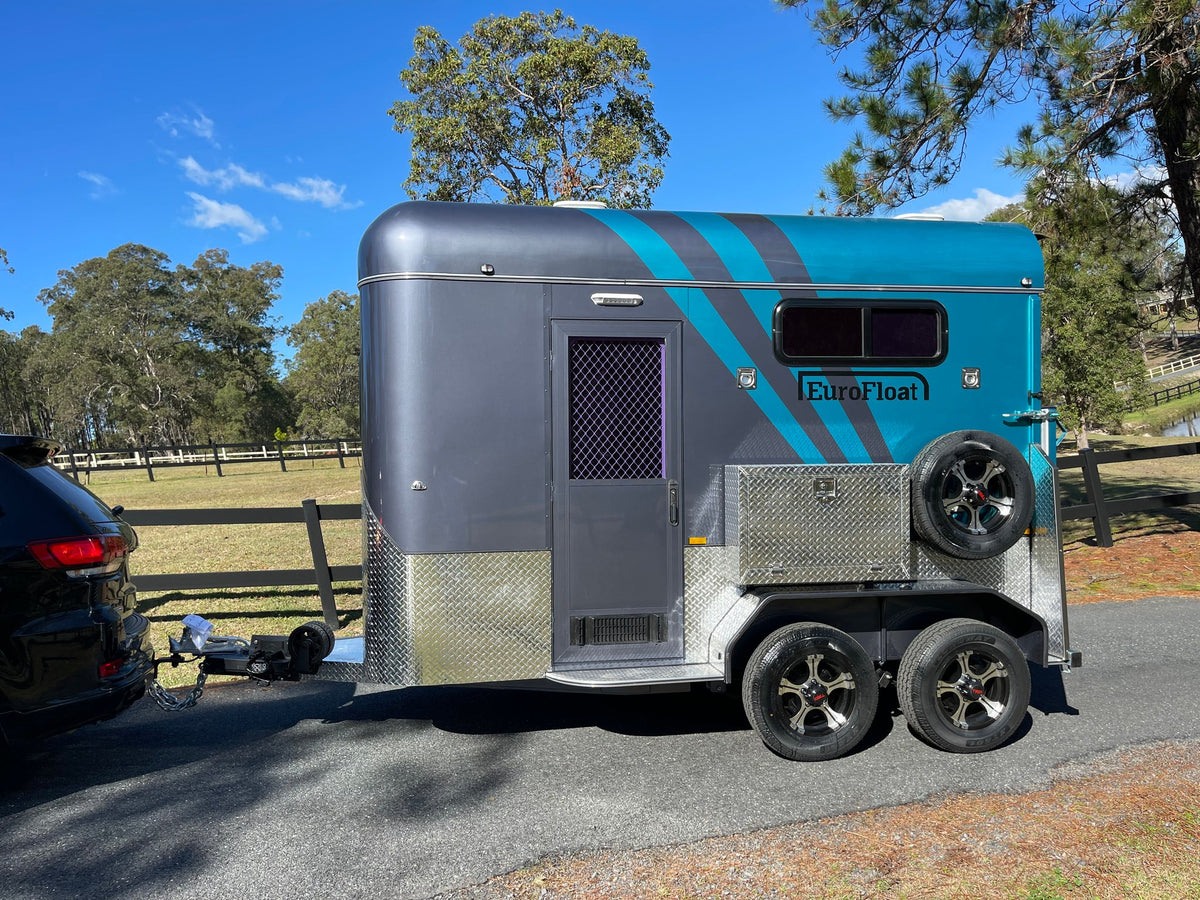
Horse float rego and roadworthy requirements depend on the state or territory, the float's weight, its age and whether you're registering, selling or transferring it. Queensland requires a safety certificate for relevant trailers between 750 kg and 4,500 kg ATM before handing them to a new owner. Victoria exempts light trailers up to 4,500 kg ATM from roadworthy certificates. NSW generally requires yearly safety checks for light trailers over five years old. Other states have different processes. Check the current requirements with your transport authority before buying, selling or moving a float interstate.
In this guide9 sections
- Does a horse float need registration in Australia?
- How much does horse float registration cost in each state?
- Does a horse float need a roadworthy certificate when sold?
- What are the Queensland horse float safety certificate rules?
- What are the NSW and Victorian rules?
- What happens when buying a horse float interstate?
- What are the rules in SA, WA, Tasmania, NT and the ACT?
- What should you check before buying or selling a horse float?
- Questions buyers ask
G'day, Wes here. Horse float rego is one of those things that can get confusing when you're buying a float, especially if you're purchasing interstate. The rules aren't identical across Australia. I want you to know what to check before you buy or sell, rather than finding out you've missed an inspection or certificate.
Does a horse float need registration in Australia?
Horse floats are trailers designed to carry horses, and registration requirements are managed by the states and territories.
Queensland, NSW, Victoria, Western Australia and the ACT explicitly state registration or licensing requirements for trailers used on their roads.
South Australia, Tasmania and the Northern Territory publish trailer registration fees, but we didn't find one official statement covering every situation. Check the requirements with the relevant transport authority.
For a horse float, I would never assume you can tow it on public roads without first checking its registration status.
When you're comparing floats, find out:
- Where it will be registered. Your home state or territory determines the process.
- Its ATM. The rated maximum trailer mass can affect inspection requirements.
- Its tare. Some registration fees are calculated using the empty weight.
- Whether it's new or used. Different registration processes may apply.
- Its current registration. A registered float and an unregistered float may need different steps.
- Where it's coming from. Interstate purchases can involve additional checks.
If you're buying from someone interstate, work out the registration process before arranging transport home.
How much does horse float registration cost in each state?
Registration fees vary considerably. Some jurisdictions use a flat trailer fee, while others calculate charges from the trailer's weight.
Here's a summary of the published government fees available when this guide was prepared.
These amounts are as at October 2026. Fees can change, and some states charge additional amounts for plates, inspections or administration.
| State | Registration fee or published basis | Authority |
|---|---|---|
| QLD | Check the online registration quote tool; no confirmed fixed fee | Queensland Department of Transport and Main Roads |
| NSW | $84 registration fee plus applicable trailer tax based on tare; other fees may apply | Service NSW |
| VIC | $70.54 for 12 months for a light trailer | VicRoads |
| SA | $110 for 12 months for the published light-trailer class | SA Government |
| WA | $14.88 per 100 kg for the published trailer category, plus additional fees | WA Department of Transport |
| TAS | Horse float over 0.5 t unladen: $176.35 to register, $153.81 to renew | Service Tasmania |
| NT | Fee depends on tare weight; example: 1,401–1,600 kg is $267.85 for 12 months | NT Government |
| ACT | Check Access Canberra's fee calculator; annual amount not confirmed | Access Canberra |
The NSW $84 amount is not necessarily the complete registration bill.
NSW also publishes trailer tax bands based on tare. For example, the listed tax is $314 for 971–1,150 kg and $362 for 1,151–1,500 kg.
WA's published rate is also only part of the cost. A trailer weighing 1,500 kg would have a weight-based component of $223.20 before the additional fees.
Tasmania is worth noting because it has a specific horse float fee category.
EuroFloat confirms whether 12 months' registration is included on your individual quote. Don't assume it's included simply because another model or purchase had it.
Does a horse float need a roadworthy certificate when sold?
This is where the differences between states become important.
A roadworthy certificate or safety certificate is separate from registration. Depending on the state, it may be required when selling, transferring or registering a float.
Queensland has a clear requirement for relevant trailers in the 750–4,500 kg ATM band.
The seller must provide the safety certificate before handing the registered trailer to a new owner. Queensland no longer requires the certificate before advertising the vehicle.
For private sellers, the certificate is valid for two months or 2,000 km.
Victoria takes a different approach. VicRoads exempts light trailers with an ATM of 4,500 kg or less from roadworthy certificates.
Here's the state-by-state comparison. Any requirement that wasn't confirmed from the checked official sources is marked for checking with the authority.
| State | Sale or transfer | Renewal | First registration | Coming from interstate |
|---|---|---|---|---|
| QLD | Safety certificate for relevant trailers 750–4,500 kg ATM | No mandatory yearly inspection for private light vehicles | Pre-registration inspection for trailers with more than one axle or over 750 kg ATM; check certificate requirements | Safety certificate required when moving to QLD registration |
| NSW | Check with Transport for NSW | Yearly pink slip for light trailers over 5 years old, subject to exemptions | Unregistered vehicle inspection; HVAIS requirements can apply above 2 t ATM | Unregistered vehicle inspection required |
| VIC | No roadworthy for light trailers up to 4,500 kg ATM | Check with VicRoads; light-trailer roadworthy exemption applies | Present trailers 751–4,500 kg ATM for the registration process | Light-trailer roadworthy exemption applies; check registration procedure |
| SA | Check with SA transport authority for light-trailer transfer | Check with SA transport authority | Identity inspection for homemade trailers or makes not on the system | Identity inspection unless the published same-owner exemption applies |
| WA | Check with WA Department of Transport | Check with WA Department of Transport | Inspection at an authorised station before licensing | Inspection required before WA licensing |
| TAS | Check with Service Tasmania | Check with Service Tasmania | Inspection at an approved station | Inspection required before registration |
| NT | Roadworthy for trailers over 750 kg ATM when 7 years old or more | For applicable older trailers, inspection required if unregistered over 12 months | Compliance inspection; roadworthy applies to relevant older trailers | Check the NT first-registration inspection requirements |
| ACT | Inspection if over 6 years old, registration cancelled or unregistered over 12 months | Check with Access Canberra | Inspection required for registration of a brand-new trailer | Inspection required regardless of age |
The table is a starting point, not a replacement for checking your particular transaction.
A float being sold, transferred, renewed or registered for the first time can trigger different requirements.
The paperwork that applied to the previous owner may not be enough for you.
What are the Queensland horse float safety certificate rules?
Queensland's rules are particularly relevant to buyers and sellers around the Gold Coast.
For relevant registered trailers between 750 kg and 4,500 kg ATM, the seller must provide a safety certificate before handing the trailer to a new owner.
The published safety certificate fee for that trailer category is $51.45 as at October 2026.
A private seller's certificate is valid for two months or 2,000 km, whichever comes first.
You don't need the certificate simply to advertise the float, but that doesn't remove the requirement before handing it over.
There are also inspection requirements for certain first registrations and when moving registration into Queensland.
If you're buying a float interstate and bringing it onto Queensland registration, check the safety certificate process before arranging the transfer.
Queensland's published guidance includes a 14-day registration timeframe when moving to Queensland from interstate.
I'd check the exact circumstances with Queensland's Department of Transport and Main Roads before relying on that period.
Don't assume a seller's roadworthy certificate from another state will automatically satisfy every Queensland requirement.
What are the NSW and Victorian rules?
NSW has an important renewal requirement that owners need to remember.
Transport for NSW requires yearly safety checks, commonly called pink slips, for light vehicles more than five years old, including trailers up to 4,500 kg ATM.
There is an exemption for trailers under 251 kg tare without brakes, but that isn't a category I'd assume applies to an ordinary horse float.
For first registration or an interstate trailer, an unregistered vehicle inspection may be required.
NSW uses AUVIS inspections, previously commonly called blue slips. Service NSW also specifies HVAIS reporting for trailers above 2 tonnes ATM in the relevant registration process.
If you're selling or transferring a registered float within NSW, check the exact requirements with Transport for NSW.
Victoria is different.
VicRoads states that light trailers with an ATM of 4,500 kg or less don't need a roadworthy certificate.
However, trailers between 751 kg and 4,500 kg ATM must be presented for the relevant registration process, which can involve an appointment and inspection fee.
A registration inspection and a roadworthy certificate aren't necessarily the same thing.
For an interstate float moving to Victorian registration, check the process with VicRoads. There are exemptions involving current registration and certain recently expired interstate registrations, but the conditions matter.
What happens when buying a horse float interstate?
Interstate purchases are common, but registration shouldn't be left until the float is ready to collect.
You need to know how it can legally be moved and what paperwork will be required at the destination.
The rules differ between states.
Queensland requires a safety certificate when moving a relevant trailer onto Queensland registration.
NSW requires an unregistered vehicle inspection for a trailer brought from interstate.
WA requires an inspection before licensing a vehicle in the state, and Tasmania requires an inspection before registration.
South Australia has identity inspection requirements, with a published exemption for some same-owner transfers where registration remains current or has only recently expired.
The ACT requires an inspection for interstate registration regardless of the trailer's age.
I'd sort out these questions before arranging delivery or collection:
- Which state will the float be registered in?
- Does its existing registration remain valid for the proposed journey?
- Is an inspection required before the registration can be changed?
- What identification and ownership documents are needed?
- Will you need an unregistered vehicle permit?
- Are there registration fees, plates or inspections to arrange?
- Who is responsible for completing each step?
Don't assume one state's registration rules apply throughout the whole transaction.
If you're buying a used float, read our new vs second-hand horse floats guide as well.
What are the rules in SA, WA, Tasmania, NT and the ACT?
These jurisdictions have their own details worth knowing.
South Australia: The published annual light-trailer registration fee is $110. Identity inspections apply to homemade trailers or makes not recorded on the system, with a listed $75 fee.
Western Australia: Trailer registration is described as licensing. An inspection is required before licensing, and the published 2026–27 trailer rate is $14.88 per 100 kg plus additional fees.
Tasmania: A separate horse float registration fee category applies. For a horse float over 0.5 tonnes unladen, the published charges are $176.35 to set up registration and $153.81 to renew.
Northern Territory: Registration fees depend on tare. From 9 February 2026, trailers over 750 kg ATM need a roadworthy inspection on transfer only once they're seven years old or more.
ACT: First registration of a brand-new trailer requires an inspection. The published trailer inspection fee is $51.10, but the annual horse float registration amount needs confirmation through Access Canberra.
These are useful differences, especially if you're moving or buying from interstate.
Where the official guidance doesn't clearly confirm a requirement, I'd check directly rather than assume the rule is the same as another state.
What should you check before buying or selling a horse float?
Before paying for a float or arranging to hand one over, make sure the registration details match the transaction.
Start with the identification information and current registration status.
Then check the relevant state requirements and any outstanding inspections.
My checklist would be:
- Identity. Check the float's VIN and identification details.
- Registration. Confirm whether it is currently registered and where.
- ATM and tare. Use the correct figures when checking state requirements.
- Inspection. Find out whether a safety certificate or other inspection is required.
- Timing. Understand when the inspection and transfer must be completed.
- Costs. Allow for registration, tax, plates and inspections where applicable.
- Interstate purchase. Check the destination state's registration process.
- Documentation. Keep the purchase paperwork and required records together.
For a used float, also have its condition assessed rather than assuming current registration proves every component is sound.
At EuroFloat, we sell floats across Australia and can quote delivery or collection from our Gold Coast and Melbourne showrooms.
Whether 12 months' registration is included is confirmed on your quote.
You can see how buying a EuroFloat works before arranging your purchase.
Questions buyers ask
Does a horse float need registration?
Registration requirements are administered by each state and territory. Check the rules for the jurisdiction where you'll use and register the float before towing it on public roads.
Does a horse float need a roadworthy in Queensland?
For relevant registered trailers between 750 kg and 4,500 kg ATM, a safety certificate is required before handing the trailer to a new owner. Other inspection requirements can apply in different registration situations.
How much is a horse float safety certificate in Queensland?
The published Queensland fee is $51.45 for the relevant trailer category as at October 2026.
Do horse floats need a roadworthy certificate in Victoria?
VicRoads exempts light trailers with an ATM of 4,500 kg or less from roadworthy certificates. Separate registration inspection requirements may still apply.
Do NSW horse floats need a yearly pink slip?
NSW generally requires a yearly safety check for light trailers over five years old, subject to the published exemptions.
Can I buy a horse float in one state and register it in another?
Yes, subject to the relevant registration and inspection processes. Check the destination state's requirements before arranging transport and transfer.
Know the requirements before you buy
Compare EuroFloat models and ask what registration and delivery arrangements apply to your quote.


Registration rules and fees change. This guide reflects the confirmed government information checked in October 2026; always confirm current requirements with your state or territory transport authority before buying, selling or registering a float.
