

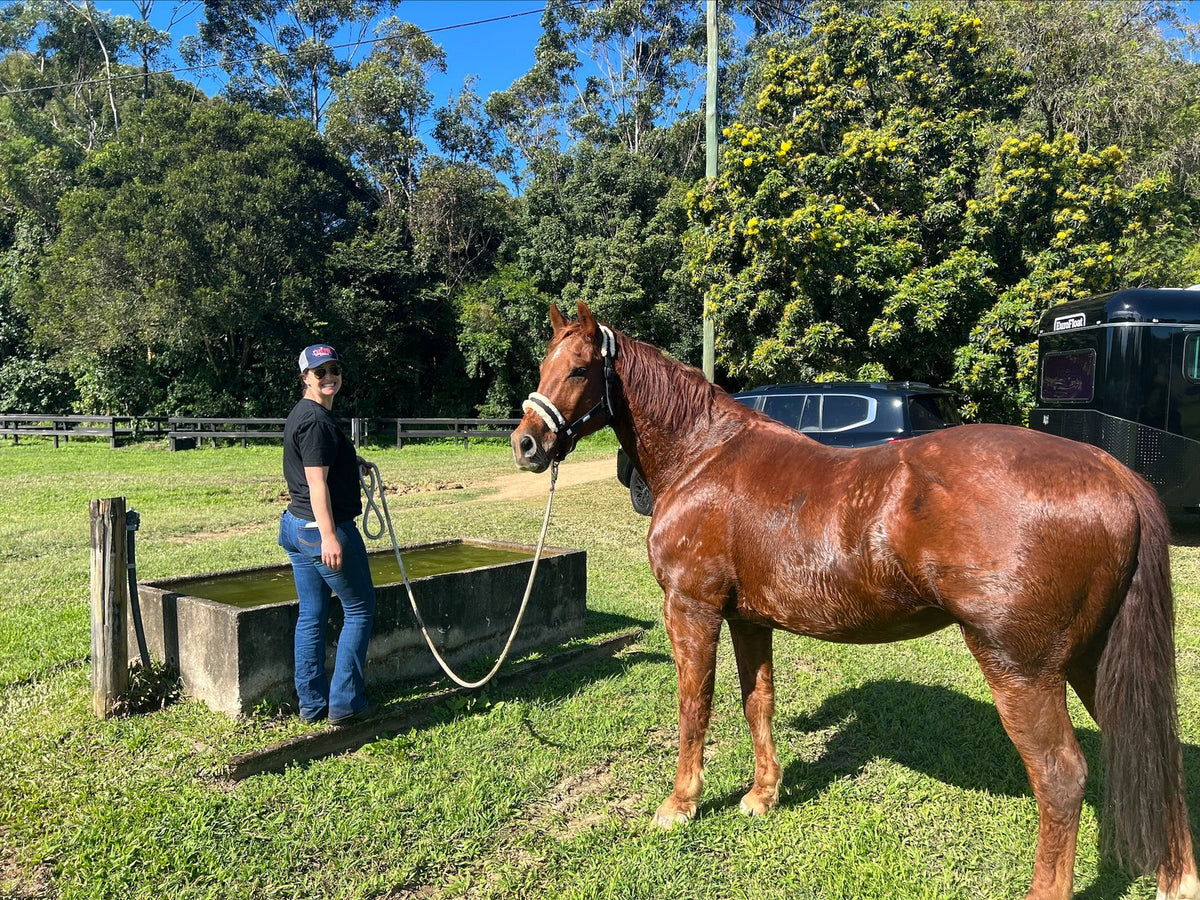
Long-distance horse travel starts with planning your route, checking your float and making sure your horses are ready for the journey. Allow time for safe stops, water, horse checks and changes in weather. Agriculture Victoria advises checking horses about 30 minutes after setting off and then about every four hours, with more frequent attention when needed. Travel during cooler conditions where practical, maintain suitable ventilation and check movement requirements before crossing state borders. If you're staying overnight, arrange safe horse accommodation before leaving home.
In this guide10 sections
- How do you plan a long-distance trip with horses?
- How often should you stop to check horses during a long trip?
- What should you pack for your horses to eat and drink?
- How do you keep horses comfortable in hot weather?
- What should you check on the float before a long journey?
- What rules apply when travelling with horses between states?
- Where can you stay overnight with your horses?
- Is a horse float with living useful for long-distance travel?
- What should you do if something goes wrong on the journey?
- Questions buyers ask
G'day, Wes here. Taking your horses a long way is different from heading down the road for a lesson. You've got more to think about, and the last thing you want is to be sorting out a problem somewhere unfamiliar. A bit of planning before you leave makes the whole trip easier.
How do you plan a long-distance trip with horses?
I like to start with the route before thinking about what needs packing.
Work out where you're going, how long the journey is likely to take and where you can safely stop with a horse float.
Don't plan the trip as though you're driving an ordinary car. You'll need more room to manoeuvre, more time to travel and places where you can check your horses without putting anyone at risk.
Before leaving, I'd work through these points:
- The route. Check the roads are suitable for your towing combination.
- Rest stops. Identify places with enough room to park safely.
- Fuel. Plan stops where you can enter and leave with the float attached.
- Weather. Check the forecast along the route, not just at the destination.
- Arrival time. Make sure someone can receive the horses if required.
- Phone coverage. Identify areas where reception may be unreliable.
- Emergency contacts. Keep relevant details available if you need help.
- Overnight accommodation. Confirm where the horses will stay before travelling.
I'd also allow time for delays. Roadworks, traffic and weather can all change your arrival time.
If the trip is particularly long, consider whether breaking it into shorter stages would be more suitable for the horses.
The aim is to arrive with horses that have been transported calmly and safely, rather than trying to finish the journey as quickly as possible.
How often should you stop to check horses during a long trip?
This is something worth planning before you set off.
Agriculture Victoria advises checking your horse about 30 minutes after starting a long-distance journey, then about every four hours.
That's useful guidance, but it doesn't mean you should ignore a horse that needs attention sooner.
Plan to stop every few hours as appropriate for the journey, and check more frequently when conditions or the horses' needs call for it.
At each suitable stop, I'd think about:
- The horses. Are they standing normally and showing any signs of distress?
- Temperature. Are the conditions inside the float suitable?
- Water. Do the horses need to be offered water?
- Equipment. Are the dividers, doors and other fittings as they should be?
- Tyres and wheels. Is there anything unusual that needs attention?
- Coupling and connections. Are the towing connections secure?
- The driver. Are you still alert enough to continue safely?
Choose somewhere suitable before stopping. A busy roadside isn't the place to casually open a float and handle horses.
Don't unload horses into an unsafe area just because you've reached a planned stop.
If a horse needs to come off the float, find an appropriate secure location and follow safe handling practices.
Agriculture Victoria's website has its full advice on transporting horses.
What should you pack for your horses to eat and drink?
Water is one of the first things I want people to think about when planning a longer trip.
Don't assume you'll be able to find a suitable water supply everywhere you stop. It makes sense to carry appropriate drinking water and equipment for offering it safely.
Horses can respond differently to travel, changes in routine and unfamiliar surroundings.
I wouldn't introduce a completely different feeding arrangement just because you're away from home.
Plan around what your horses normally eat and the advice of your veterinarian or equine professional, especially if a horse has special dietary needs.
Things worth packing include:
- Drinking water and suitable buckets.
- Familiar feed and hay where appropriate.
- Feed containers that can be stored securely.
- Any equipment needed to offer water safely.
- A way to manage manure and used bedding.
- Supplies needed for an overnight stop.
- A plan for getting additional water if the journey is delayed.
Remember that water and feed carried in the float add to its loaded weight.
You need to allow for that when working out what your float and towing vehicle can safely carry.
Don't guess how much your horse will need over a long journey. Consider the individual horse, the conditions and suitable professional advice.
How do you keep horses comfortable in hot weather?
Heat deserves particular attention when you're towing horses in Australia.
A float can become uncomfortable when conditions are hot, particularly if ventilation isn't suitable or the horses are wearing more covering than they need.
Where practical, I'd plan travel for cooler parts of the day and avoid unnecessary delays during hot conditions.
If the forecast is unsuitable for safe transport, changing the plan may be the sensible option.
Here's what I would consider:
- Ventilation. Make sure the float's intended vents and openings are operating correctly.
- Rugs. Choose coverings according to the horse and conditions, avoiding unnecessary overheating.
- Water. Plan suitable opportunities to offer water.
- Travel time. Consider cooler conditions when organising departure.
- Stops. Choose locations where you can check the horses safely.
- Horse condition. Watch for unusual behaviour or signs of heat-related distress.
- Parking. Avoid leaving horses unattended in a parked float, particularly in hot weather.
Don't assume opening every window is automatically the right answer. Follow the float manufacturer's instructions for ventilation during travel.
The same applies to rugs. A rug that's useful in one situation may be unsuitable in another.
If a horse shows signs of heat stress or illness, stop safely and seek veterinary advice.
The horse's welfare comes before the schedule.
What should you check on the float before a long journey?
For a long trip, I'd give the float a proper inspection rather than relying only on a quick look before leaving.
You want to know that the towing equipment, running gear and horse area are all ready for the journey.
Start with the same routine you'd use for a shorter trip, then pay extra attention to anything that hasn't been checked recently.
My list would include:
- Tyres. Check cold pressure, tread, age and visible damage.
- Spare tyre. Make sure it's suitable and ready if you carry one.
- Wheel assemblies. Look for damage or signs of mechanical problems.
- Brakes. Confirm the system operates correctly.
- Breakaway equipment. Check the required connections and condition.
- Coupling. Check the hitch, locking arrangement, chains and connections.
- Lights. Test the trailer's required lights.
- Floor. Inspect the surface and the area under the mats.
- Dividers. Check locking points, padding and fittings.
- Doors and ramp. Confirm everything closes and secures properly.
- Loading. Allow for the weight of horses, water, feed and equipment.
If the float has been sitting unused or is due for servicing, arrange the appropriate work before leaving.
Don't set off on a long journey knowing something needs attention.
Our safe horse float towing checklist covers the pre-tow routine in more detail.
I'd also read horse float tyres: pressure, size and checks before a big trip.
The further you're travelling, the more important it is to start with a float that's properly prepared.
What rules apply when travelling with horses between states?
Interstate travel can involve more than road rules.
Depending on where you're travelling, biosecurity requirements and animal movement rules may apply.
These can differ between states and territories, and sometimes between areas within a state.
Queensland's cattle tick zones are one example of why you need to check the route as well as the final destination.
Don't assume that because you've crossed a border before, the same requirements still apply.
Before leaving, I'd check:
- The agriculture department in your state of departure.
- The requirements for the state you're entering.
- Any conditions that apply to states you're travelling through.
- Biosecurity and animal movement documentation.
- Requirements relating to horses, feed or other items being transported.
- The rules at any showground, event or overnight property you're visiting.
Use current official information rather than relying on something another rider was told previously.
For example, the Queensland Government publishes official guidance on moving horses.
It's your responsibility to understand the requirements that apply to your journey.
If you're uncertain, contact the relevant agriculture authority before travelling.
Where can you stay overnight with your horses?
If you're breaking up a journey, organise accommodation that suits both you and your horses.
Horse-friendly campgrounds, equestrian properties and some showgrounds may have suitable facilities, but you need to confirm what's actually available.
Don't assume a property accepts horses simply because it has camping.
I would ask about:
- Horse accommodation. Are yards, stables or suitable paddocks available?
- Water. What drinking water facilities are provided?
- Vehicle access. Is there enough room for your towing combination?
- Arrival arrangements. Can you arrive at the time you're planning?
- Horse facilities. What equipment do you need to bring?
- Biosecurity. Are there property or regional entry requirements?
- Camping. Are people permitted to stay beside their horses?
It's worth confirming these details directly with the property.
If you're using portable yards, make sure they're suitable for the horses, assembled correctly and permitted at the location.
EuroFloat offers double panel aluminium yards as an upgrade, priced at $1,295 as listed in October 2026.
That doesn't replace checking whether the destination allows portable yards or whether the setup is suitable for your horses.
Our camping with horses guide is a useful starting point for planning overnight stops.
Is a horse float with living useful for long-distance travel?
It can be, particularly if you're regularly staying away at shows or travelling over several days.
Having living accommodation in the float means you can plan parts of the trip around staying near your horses, where the destination permits it.
But I wouldn't tell everyone they need an Overnighter just because they're taking a longer trip.
Think about how often you're away and what accommodation you actually need.
Our range includes camper floats and Overnighters with different layouts and equipment.
The important things to compare are:
- The number of horses you're carrying.
- The usable space in each horse bay.
- The living arrangement and fitted equipment.
- The available storage for feed, tack and supplies.
- The tare, ATM and remaining loading allowance.
- The towing vehicle required for the loaded float.
- The facilities available at your usual destinations.
A float with living equipment can carry more of the things you need for a trip, but the equipment and supplies also add weight.
Don't assume the extra space means you can load everything without checking the limits.
You can view EuroFloat horse floats with living to compare the different arrangements.
For me, it's about making regular travel practical without buying more float than you need.
What should you do if something goes wrong on the journey?
Even with good planning, things can change.
You might come across unexpected weather, a road closure, a vehicle problem or a horse that isn't travelling comfortably.
Have a plan before you need it.
I'd keep important contact details accessible, including suitable roadside assistance, a veterinarian and someone who can help with the horses if required.
Phone coverage can be unreliable in some areas, so don't depend entirely on being able to search for help while you're stopped.
A horse first-aid kit is worth carrying, with contents chosen according to suitable veterinary advice.
It should be accessible without unloading everything in the float.
If a horse appears unwell or distressed, find a safe place to stop and assess the situation. Seek veterinary advice when needed.
If the vehicle or float develops a mechanical problem, don't continue towing until it's safe to do so.
Some riders also choose to fit cameras to help monitor the horse area.
A camera can be useful, but it doesn't replace physical checks or stopping when something needs attention. Read our horse float camera guide if you're considering one.
A successful journey isn't just about reaching the destination. It's about getting the horses there safely and being prepared for what might happen along the way.
Questions buyers ask
How often should you stop when towing horses long distance?
Agriculture Victoria advises checking horses about 30 minutes after setting off and then about every four hours. Check more frequently whenever the horses, weather or circumstances require it.
Should you offer horses water during long journeys?
Plan suitable opportunities to offer water and carry appropriate supplies. Individual requirements vary, particularly with weather, journey length and the horse's condition.
Is it better to transport horses in cooler weather?
Where practical, travelling during cooler conditions can help manage heat exposure. Maintain suitable ventilation and monitor the horses throughout the journey.
Can you take horses across Australian state borders?
Yes, subject to any applicable animal movement and biosecurity requirements. Check the current rules with the relevant state agriculture departments before travelling.
Can you camp overnight with a horse float?
Yes, at suitable properties that permit horses and camping. Confirm horse accommodation, water, access and any requirements before arriving.
Can a horse float camera replace stopping to check the horses?
No. Cameras are an additional monitoring aid. You still need suitable stops and physical checks of the horses and float.
Prepare for the journey ahead
Compare EuroFloat models for show days, overnight trips and longer journeys, and choose the layout that suits your horses.


Horse transport advice is general information. Follow current animal welfare, biosecurity and road requirements, and seek veterinary or other qualified advice when needed.
