

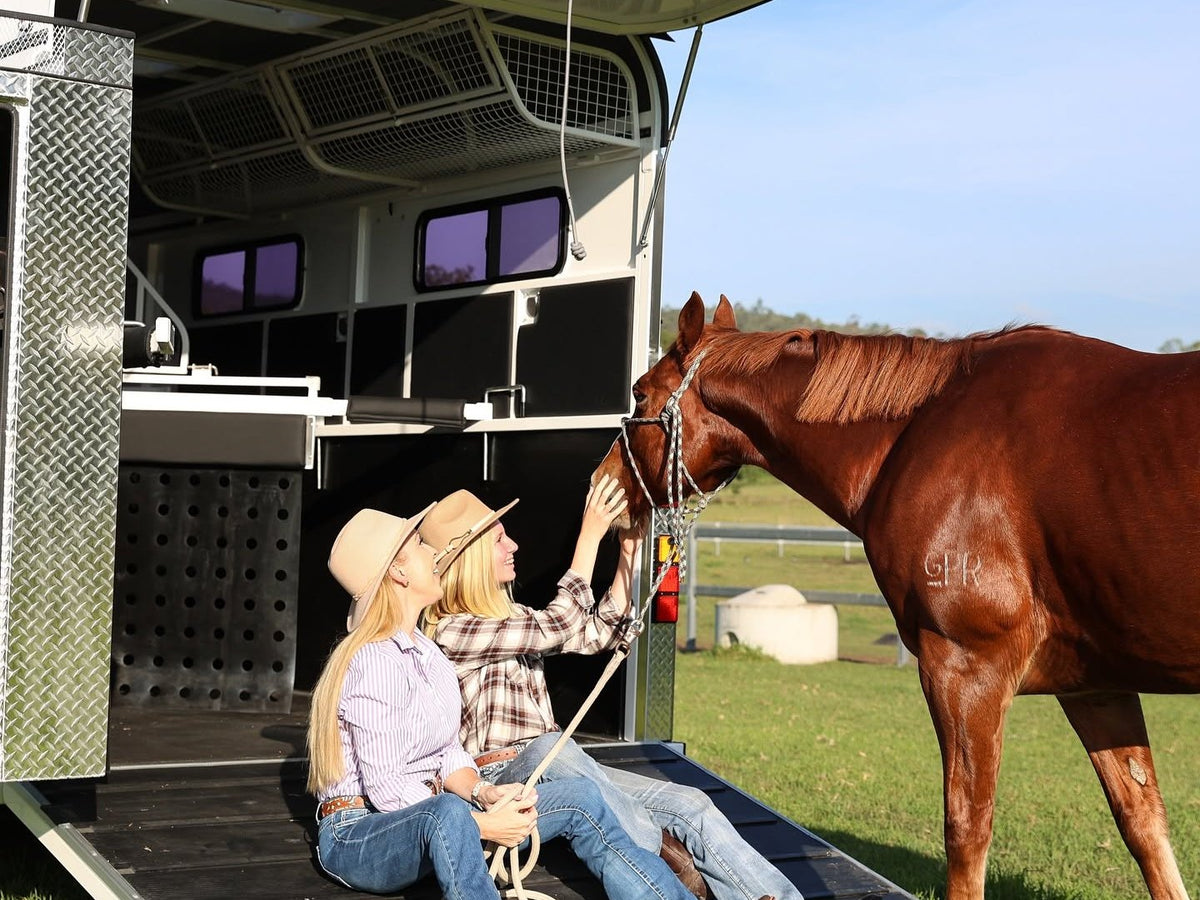
A calm day out on horseback usually starts with a calm load at home. Practise loading when you don't need to go anywhere, keep sessions short, and finish on a good one. In a straight load, many owners find it safest to close the rear bar before tying up, and untie before opening it. In an angle load, load the front bay first and unload the last horse in first. And if you live in fire or flood country, a horse that loads quietly at home is far easier to get out in an emergency.
In this guide10 sections
G'day, Wes here. Every horse person I know has their own way of loading, and if yours works and your horse walks on quietly, keep doing it. This guide isn't about telling anyone they're wrong. It's a collection of what we see work for a lot of owners, from Pony Club families loading for the first time through to experienced riders who just want a few fresh ideas for a tricky horse.
A calm day out starts at home
Think about your best days out on horseback. Chances are your horse arrived relaxed, unloaded quietly and was ready to work. Now think about the days that went sideways. Plenty of them probably started with a battle at the ramp.

A horse that's been wound up getting on the float often travels tense, arrives sweaty and takes half the day to settle. A horse that loads calmly tends to travel calmly. So it's worth treating loading as part of your training, not just a job you rush before you leave.
Before you load
- Hitch the float to your vehicle first. A float that isn't hitched can tip or move as a horse walks on. Many owners also chock the wheels.
- Park somewhere sensible. Level, firm ground, with space around the ramp and nothing for a horse to catch on.
- Make the float inviting. Open the front windows or storm door for light, hang a hay net, and check the floor and ramp are clean and not slippery.
- Dress your horse for travel. A well-fitted headstall and lead, and travel boots or bandages if your horse is used to them. It's worth trying new boots at home before a trip.
- Dress yourself for safety. Gloves, sturdy boots and a helmet are a good idea. Never wrap the lead rope around your hand.
- Allow plenty of time. Horses read our moods well. If you're running late and stressed, your horse may pick up on it.
Loading a 2-horse straight load (2HSL)
In a straight load, horses stand side by side facing forward, with a divider between them and a rear bar (bum bar) behind them.

- Lower the ramp and swing the centre divider across if your horse prefers a wider space to walk into.
- Walk your horse straight up the ramp, looking where you're going rather than back at the horse. Many horses follow a confident leader more willingly than one who's staring at them.
- Once the horse is in, have a helper do up the rear bar before you tie up. This is the step many experienced handlers swear by: if a horse is tied and runs backwards before the bar is on, it can panic and get hurt.
- Tie up with a quick-release knot or a breakable tie, short enough that your horse can't turn around or get a leg over the rope, but long enough to balance.
- Exit through the front escape door rather than squeezing past the horse, then raise and latch the ramp.
One horse on board? Many owners load a single horse on the right-hand side. Australian roads slope slightly to the left, so it helps the float sit level. With two horses of different sizes, the heavier one usually goes on the right.
Loading a 2-horse angle load (2HAL)
In an angle load, horses stand on an angle with dividers that swing across to close each bay. The bays are longer, so bigger horses often find them more comfortable, and a lot of horses seem to like the open walk-on.

- Open the rear ramp and swing the dividers back.
- Load the front bay first. Walk your horse in and let them settle into the angle.
- Close the divider gently behind them and latch it. Then tie up, in the same way as a straight load.
- Load the second horse into the rear bay, close the divider and tie up.
- Raise and latch the ramp.
On EuroFloat Prestige angle loads, the dividers are telescopic, so you can set each bay to suit your horse. Have a play with them at home before your first trip. Compare straight and angle loads
Loading a 3-horse angle load (3HAL)
A 3-horse angle load works the same way as a 2-horse, with one more bay.

- Load front to back: bay one, then bay two, then bay three.
- Think about weight and personality. Many owners put the heaviest horse in the front bay, which helps the float's balance and ball weight. It also helps to put the calmest traveller where they'll settle the others.
- Plan your unloading order too. The last horse on is the first off. If one horse gets anxious when left alone, you might load them last so they're not left behind for long.
- Stay under your ATM. Three horses, water and gear add up quickly. Check the loaded float's weight against its ATM and your vehicle's GCM. Read the pre-tow checklist
Unloading calmly
Unloading is where a lot of bumps and scrapes happen, often because horses rush off once the ramp drops. A few things that tend to help:
- Straight load: untie your horse before the rear bar is undone. Then lower the ramp, undo the bar, and ask your horse to back out slowly and straight, one step at a time. A helper at the back can guide them so they don't step off the side of the ramp.
- Angle load: unload the rear bay first. Untie, open the divider and let the horse turn or back out, whichever they've learnt. Then move on to the next bay.
- Don't rush. Ask for a pause at the top of the ramp. Horses that learn to wait tend to unload more safely.
- Stay out of the danger zone. Try not to stand directly behind the horse or between the horse and the side of the float.
For beginners and Pony Club families

If you've just bought your first horse float, or your child has just joined Pony Club, welcome. Loading can feel daunting at first, but most horses and people get the hang of it with a bit of patience.
- Practise on a quiet day. Pick a day when you don't need to go anywhere. Walk on, give a pat and a bit of feed, and walk off.
- Keep it short. Ten good minutes is better than an hour of frustration. Finish on a good note, even if it's just a front foot on the ramp.
- Go for a short drive. Once your horse loads well, try a ten-minute drive around the block before your first rally.
- Ask for help. Your Pony Club instructors and experienced members have loaded hundreds of horses. Most are happy to help, and watching someone else is a great way to learn.
- Kids and safety. Many families find it works best for an adult to handle loading and unloading, with kids helping with the ramp and gear until they're confident and their horse is reliable.
- Get to know your float. Practise lowering the ramp, closing the dividers and opening the escape door before you add a horse.
If your horse won't load
Every horse is different, and you know yours best. If loading has become a battle, these ideas have helped many owners:
- Stay calm and patient. Tension at your end of the rope usually travels down it.
- Reward every try, even a single step towards the ramp.
- Make the float light and open. Some horses relax if they can see through to the front.
- Try feeding near the float, then on the ramp, then inside, over a few days.
- Load a calm, experienced companion first, if you have one.
- Think about whether something has frightened your horse before, such as a rough trip or a slip on a ramp.
- Get help from a qualified trainer or coach. A fresh set of eyes often solves problems quickly.
Loading in an emergency
For anyone in bushfire or flood country, this is the most important part of the article. In an emergency, you won't have time to coax a reluctant horse. The work you do at home, on calm days, is what gets your horses out.
- Make a plan before the season starts. Know where you'll take your horses and how you'll get there. Have a backup destination and route.
- Leave early. Floats are slow and roads can close. If your fire or emergency service says leave, many owners find it's best to go well before conditions get bad.
- Practise loading regularly. Make sure every horse on the property loads reliably, and that more than one person in the family can load them.
- Keep your float ready. Registration current, tyres pumped, lights working, and parked where you can hitch up quickly. Store spare headstalls and leads somewhere you can grab them.
- Have an evacuation kit. Water, buckets, hay, first aid, any medications and your horses' paperwork.
- Identify your horses. A mobile number written on your horse with a livestock marker, or a tag on the headstall, can help reunite you if you're separated.
- Know your limits. If you have more horses than float spaces, plan for more than one trip or arrange help with neighbours ahead of time. Never put yourself or your family at risk to load a horse.
Check your state's fire and emergency service for current advice and their guide to planning for animals.
Questions buyers ask
Is a straight load or angle load easier to load?
It depends on the horse. Many horses find the open walk-on of an angle load inviting, while others are perfectly happy in a straight load. If you can, try loading your horse into both before you buy.
Should I tie my horse up before or after closing the rear bar?
In a straight load, many handlers close the rear bar first, then tie up. When unloading, untie first, then open the bar. That way your horse is never tied without the bar behind them.
Which bay do I load first in an angle load?
Usually the front bay first, working back. Unload in reverse, rear bay first.
Can my child load their pony for Pony Club?
That depends on the child, the pony and the float. Many families have an adult handle loading until both child and pony are confident and reliable. Your Pony Club instructors can help.
How can I get my horse ready for an emergency evacuation?
Practise loading on calm days so your horse loads quickly and reliably, keep your float roadworthy and easy to hitch, and make a plan with your local fire or emergency service's advice.
Find the float your horse loads into happily
See our 2-horse straight loads, 2-horse angle loads and 3-horse angle loads in person at our Gold Coast or Melbourne showroom, by appointment. EuroFloat is Australian owned and operated.


This guide is general information. Every horse is different, so use your judgement and get help from a qualified trainer if loading is a problem. In an emergency, always follow the advice of your state's fire and emergency services.
