

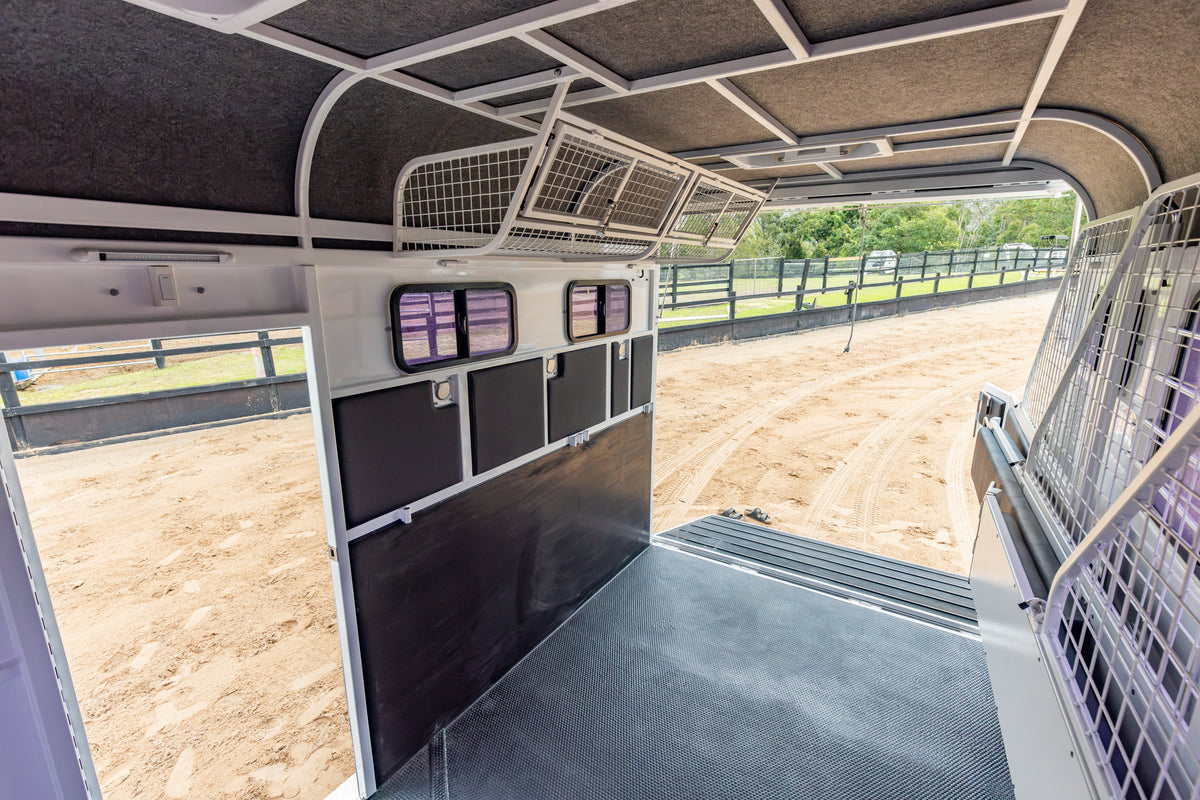
Horse float flooring needs to support the horses travelling on it, cope with regular use and allow for proper inspection and cleaning. Timber, aluminium and composite floors have different properties. Timber can rot, especially where moisture stays trapped underneath. Aluminium doesn't rot like timber, but urine, manure and trapped moisture can contribute to corrosion if it's neglected. Composite flooring varies depending on the product and construction. Whatever material you choose, lift the rubber mats regularly, inspect the floor underneath and understand how it's built before buying.
In this guide9 sections
- Why does horse float flooring matter so much?
- How do timber, aluminium and composite horse float floors compare?
- What do rubber mats actually do?
- What flooring does EuroFloat use?
- Why do urine and manure cause flooring problems?
- How do you check the floor on a second-hand horse float?
- What should you ask about the floor when buying new?
- How do you look after a horse float floor over time?
- Questions buyers ask
G'day, Wes here. The floor is one part of a horse float you should never overlook. It's hidden under rubber mats most of the time, so people often don't think about it until something needs attention. I want you to know what you're buying and how to look after it.
Why does horse float flooring matter so much?
Your horses stand on the floor for the whole journey. Every time you accelerate, brake or turn, they adjust their balance while standing on that surface.
That means flooring isn't something I'd choose on appearance alone. You need to understand what's supporting the horse, what sits on top of it and how you can inspect it over time.
A floor that looks tidy from above might have problems underneath. That's particularly important when you're buying a second-hand float that has carried horses for years.
There are a few things I look at first:
- Material. What is the floor made from, and how does it behave when exposed to moisture?
- Construction. How is the floor supported and attached to the float?
- Condition. Is there damage, deterioration or anything that needs professional attention?
- Surface covering. What rubber or other material sits over the floor?
- Cleaning access. Can you lift the mats and inspect the surface properly?
- Servicing. What checks does the manufacturer recommend?
Don't assume that a floor is in good condition just because the rubber mat looks clean.
The floor should be part of your inspection whenever you're comparing floats, whether you're buying new or second-hand.
How do timber, aluminium and composite horse float floors compare?
These are three material groups you'll come across when researching horse floats. Each needs to be judged by the actual product and the way it's installed.
Here's a general comparison.
| Floor material | What to know | What to check |
|---|---|---|
| Timber | Can provide a solid floor when properly designed and maintained, but can absorb moisture and rot | Soft areas, moisture damage, underside condition and support |
| Aluminium | Doesn't rot like timber, but can suffer corrosion if contaminants and moisture are left against it | Panel condition, corrosion, joints and trapped material |
| Composite | Properties depend on the materials, design and manufacturer | Product specification, load rating, damage and installation |
With timber, the thing I'd be particularly careful about is moisture that gets trapped out of sight. Water and urine can work their way into areas that aren't obvious when you lift the mat.
The underside matters just as much as the top. A timber floor can look reasonable from inside the float while needing attention underneath.
Aluminium doesn't have the same rotting problem, but that doesn't mean you can ignore it. Urine and manure should be cleaned off rather than left sitting against the material.
Composite is a broad description. It doesn't tell you exactly what a particular floor is made from or how it's designed to carry a load.
If a seller tells you their composite flooring has certain properties, ask for the manufacturer's specifications and care instructions. Don't assume every composite floor behaves the same way.
Whatever material you're looking at, I'd want to know how it is supported, how it can be inspected and what needs doing to keep it in good condition.
What do rubber mats actually do?
Rubber mats sit between the horse and the underlying floor. They provide a surface for horses to stand on and help protect the floor from normal contact and wear.
But they're a covering, not a substitute for a sound floor underneath.
This is the important part: rubber mats can hide things you need to see.
Urine, manure and wash water can find their way under the mats. If that material stays trapped, it can create problems over time.
When inspecting any float, I'd lift the mats where it's safe and practical to do so. Don't just look at the top.
Pay attention to:
- Dirt, manure or moisture trapped underneath.
- Damage to the mats themselves.
- Areas where the mat doesn't sit properly.
- Discolouration or deterioration of the underlying floor.
- Joints and edges that are difficult to clean.
- Anything that looks different from one bay to another.
A worn mat doesn't automatically mean the floor underneath has failed. But you can't establish the condition of the floor without looking.
On a second-hand float, I'd be wary if nobody can show you what's underneath the mats.
What flooring does EuroFloat use?
Every EuroFloat has a floor made from 25 mm reinforced aluminium panels.
We use aluminium because it doesn't rot like timber. That's useful in a horse float where moisture, manure and regular cleaning are part of ownership.
Our angle load specification sheets also list 10 mm rubber covering over the aluminium floor panels.
The covering and the floor underneath do different jobs. The rubber is the surface the horses stand on, while the reinforced aluminium panels form the underlying floor system.
I still expect owners to clean underneath their mats and keep an eye on the condition of the floor.
Every new EuroFloat also comes with an 11-Year Aluminium Flooring System warranty. Conditions apply, and the warranty starts on the day you pick up your float.
That doesn't mean you can forget about floor care for 11 years. You need to follow the servicing and maintenance conditions that apply to your float.
If you're comparing flooring systems, ask each seller exactly what their warranty covers, what is excluded and what you need to do to keep it valid.
Why do urine and manure cause flooring problems?
A horse float floor gets exposed to things that aren't particularly kind to materials.
Urine, manure, dirt and moisture are part of normal horse transport. The problem comes when they're allowed to sit against the floor for long periods.
With timber, trapped moisture can contribute to deterioration and rot.
With aluminium, contamination and retained moisture can contribute to corrosion. Aluminium doesn't rot like wood, but it still needs proper care.
Rubber mats can make this harder to notice because they cover the affected area.
I'd get into a simple routine after using the float:
- Remove manure and loose bedding or dirt.
- Lift the mats periodically so the floor can be checked.
- Clean the underlying surface according to the manufacturer's instructions.
- Make sure wash water and trapped moisture are dealt with.
- Let the area dry properly before replacing the mats.
- Check the corners, joints and areas that are harder to reach.
You don't need to turn every clean-out into a major job. The point is to prevent material from sitting underneath the mats unnoticed.
Be careful with cleaning products too. Use products and methods suitable for the actual floor and mat materials rather than assuming anything used around the house will be appropriate.
I've covered the maintenance routine in more detail in how to clean and look after your horse float floor.
How do you check the floor on a second-hand horse float?
This is something I would spend proper time on.
A second-hand float might have been well cared for, or it might have years of moisture and wear that you can't see in the advertisement.
Start with the seller's description, then inspect the actual floor.
Here's my checklist:
- Lift the rubber mats. Ask to see the underlying floor in each horse bay.
- Check for soft areas. On timber, softness or movement can be a warning sign.
- Look for corrosion. On aluminium, examine any suspicious areas or damage.
- Check the underside. Inspect the floor and supports from below where safe and accessible.
- Look at joints and edges. These are areas where dirt and moisture can collect.
- Check past repairs. Ask what has been replaced and who carried out the work.
- Look for trapped moisture. Pay attention to staining and signs of ongoing water entry.
- Ask about maintenance. Servicing records and an owner's cleaning routine can tell you useful things.
- Get professional advice. If anything looks concerning, arrange a qualified inspection before buying.
Don't crawl under an unsupported float or try to test a questionable floor by jumping on it. Have the float made safe and inspected properly.
If the seller can't explain the floor material or won't allow a reasonable inspection, I'd want to know why.
And if you find an area that looks damaged, don't assume a new rubber mat will solve it.
For the wider buying checks, read our new vs second-hand horse floats guide.
What should you ask about the floor when buying new?
Buying a new float gives you the opportunity to understand the flooring system before it has years of use.
I would ask every seller the same questions.
First, what is the underlying floor made from? Then ask how it's installed, what sits over it and what ongoing care is required.
Don't stop at a general statement about the material.
Ask for clear answers to these points:
- What material and construction does the actual model use?
- What is fitted above the underlying floor?
- Can the covering be lifted for cleaning and inspection?
- How should the floor be cleaned?
- How often should the floor be inspected?
- What servicing records are required?
- What does the warranty cover?
- When does the warranty start?
- Who handles repairs or warranty enquiries?
I'd also ask to look at the floor in person, including underneath the rubber mats if practical.
A seller should be able to explain the system without relying on a few impressive-sounding words.
At EuroFloat, the floor system is one of the things we'll talk you through when you inspect a model. You can compare our horse floats for sale before arranging a showroom visit.
How do you look after a horse float floor over time?
Looking after the floor should be part of normal float ownership, not something you only think about when you're selling it.
Regular cleaning matters, but inspection is just as important.
You want to notice changes early rather than allowing a small issue to become a bigger repair.
My routine would include three parts.
After trips: Clear out manure, bedding and dirt. Deal with spills and leave the float clean and dry.
Regularly: Lift the mats, look at the underlying surface and check the condition of the covering.
During servicing: Have the flooring and related areas checked by a qualified person, alongside the other items requiring attention.
EuroFloat's warranty conditions require servicing at least every 12 months by a qualified mechanic, with the records kept. Defects need to be reported within 10 days with clear photographs.
Those requirements matter when you're relying on warranty coverage.
Don't wait until a visible problem becomes serious before asking for advice. Our Service Centre handles servicing, repairs, warranty and parts.
The way I see it, a floor is something you should be able to understand, inspect and maintain. That's more valuable than choosing a material based on a sales description alone.
Questions buyers ask
What is a horse float floor made from?
Horse float floors can be made from timber, aluminium or various composite systems. The actual construction, support and surface covering matter as much as the material name.
Is aluminium flooring better than timber?
They have different properties. Aluminium doesn't rot like timber, but it can still suffer corrosion if neglected. Compare the complete flooring system and its maintenance requirements.
Can timber horse float floors rot underneath?
Yes. Moisture can cause timber to rot, including in areas that are difficult to see from inside the float. Inspect the underside and lift the mats before buying second-hand.
Should I lift the rubber mats when cleaning my float?
Yes, periodically. Dirt, manure, urine and moisture can collect underneath. Follow the floor and mat manufacturer's cleaning instructions.
What flooring does EuroFloat use?
Every EuroFloat has 25 mm reinforced aluminium floor panels. Angle load specification sheets also list 10 mm rubber covering over the panels.
How long is the EuroFloat flooring warranty?
Every new EuroFloat has an 11-Year Aluminium Flooring System warranty, starting on the day you pick up your float. Conditions apply, including servicing and record-keeping requirements.
Look underneath before you choose
Compare flooring, construction and warranty details across our range, and see the actual floors at a showroom visit.


Flooring information is general guidance. Check the actual float, applicable warranty terms and manufacturer instructions, and seek a qualified inspection if you have concerns about floor condition.
